
-
About Us
- Company Profile
- Organization
- Development History
- Honors & Certificates
- Corporate Culture
- Employee Showcase
- Company Leadership
-
Service Capabilities
- National Quality Inspection Centers
- Professional Laboratories
- Future Development
- Research & Testing Bases
-
Tech Innovation
- Innovation Platforms
- Innovation Teams
- Innovation Achievements
- Bus Technology & Research
-
National Quality Inspection Centers
- National Bus Quality Inspection & Testing Center
- National Motorcycle Quality Inspection & Testing Center (Chongqing)
- National Intelligent Connected Vehicle Quality Inspection & Testing Center (Chongqing)
- National New Energy Vehicle Quality Inspection & Testing Center (Chongqing)

Professional Laboratories
- Vehicle Testing Research Division
- New Energy & Environmental Testing Division
- Automotive Electronics & Information Testing Division
- Safety & Reliability Testing Division
- Motorcycle Testing Division
- Chongqing Motor Vehicle Compulsory Inspection Test Track
- Shenzhen Yupeng New Energy Vehicle Testing & Research Co., Ltd.
- Tianjin Yuhai Motor Vehicle Inspection Co., Ltd.
- Chongqing Yu'ou Motor Vehicle Testing Co., Ltd.
New Energy & Environmental Testing Division
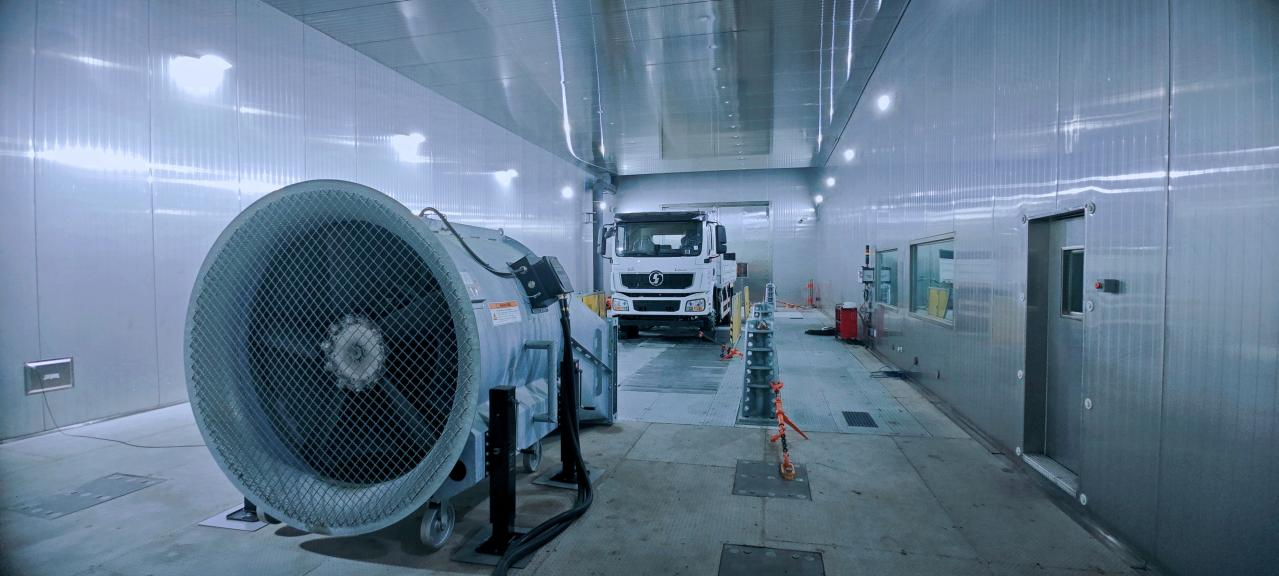
The New Energy & Environmental Testing Division focuses on NEV safety, builds a national-level technical service platform, researches and applies emissions technologies, and drives the automotive industry's green and low-carbon transformation. It has over 300 professional technicians, including 40-plus holding senior professional titles and 70-plus with master's or doctoral degrees, a total laboratory area of about 18,000 m², and nearly 2,000 sets of professional instruments/equipment. It operates nationally leading whole-vehicle fire-safety laboratories, NEV complete-vehicle and key-component laboratories, and emissions laboratories. Leveraging its advanced facilities and equipment, it conducts technical research in the new-energy and environmental-protection fields and has established a scientific, comprehensive evaluation system for new-energy and energy-saving/emission-reduction performance. In supporting government functions, it carries out vehicle type approval and conformity spot-checks for agencies such as the Ministry of Ecology and Environment and the Ministry of Industry and Information Technology, covering fuel-vehicle fuel consumption, emissions and engines, and NEV driving range, batteries, motors, etc. In empowering automakers, it conducts R&D verification of fuel consumption, emissions, energy consumption and core components, with services extending to export certification, energy-storage batteries, charging piles, extreme thermal safety, hybrid powertrains, energy flow, dual-carbon, charging systems, methanol engines, chemical analysis, and in-use vehicle testing and evaluation.
It has five research offices:

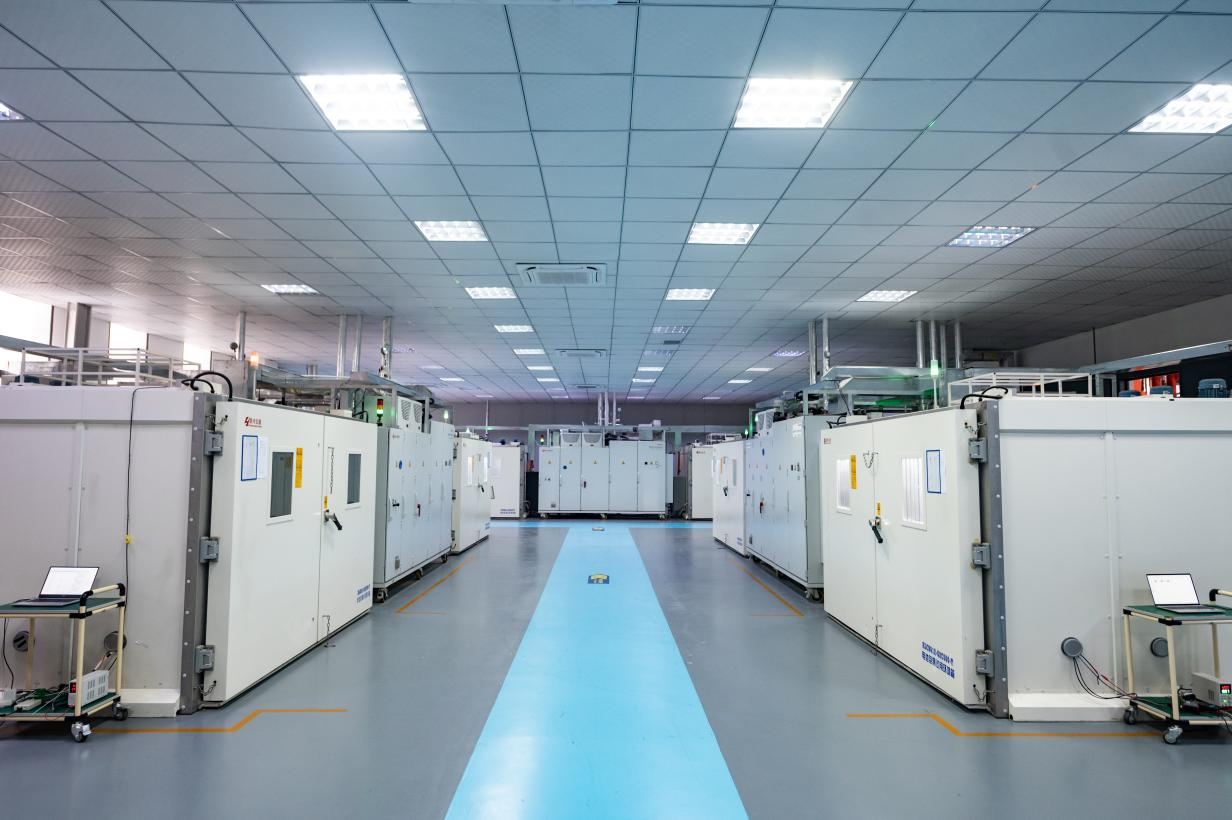
1. Forward-looking Technology Research Office Covers four segments — whole-vehicle fire safety, dual-carbon, charging compatibility, and energy flow. It provides fire-performance optimization, whole-vehicle charging-adaptability optimization, whole-vehicle energy-flow testing and thermal-management testing optimization, as well as carbon verification and carbon-reduction services. Key services include: China Electric Vehicle Fire Safety Index testing, and whole-vehicle thermal-propagation and fire testing; whole-vehicle charging-protocol and interoperability testing, charging compatibility and road testing, whole-vehicle high/low-temperature charging performance, charging safety evaluation, and CCC inspection and type testing of charging piles; whole-vehicle energy-flow testing, thermal-management performance testing, whole-vehicle dynamic/economy testing and simulation, and drag-decomposition testing, to reduce product energy consumption and improve thermal comfort; carbon/environmental footprint accounting for buses, passenger cars, trucks, batteries, motorcycles and other products under EPD and ISO 14067/14040/14044, with certification certificates obtained; and organization-level GHG and product-carbon-footprint validation and verification.
2. Battery & Component Test Research Office Covers three segments — NEV batteries, electrical components, and hydrogen fuel cells, providing one-stop testing, design verification and research analysis for traction batteries, energy-storage batteries, marine batteries, railway batteries, e-bike/motorcycle batteries, hydrogen fuel cells, charging interfaces, on-board terminals, DC-DC converters, etc. Key tests include: type approval and export certification of battery cells and packs; type approval of hydrogen fuel cells and e-bike/motorcycle batteries; type approval of charging interfaces (GB/T 20234) and on-board terminals, and testing of OBC/DC-DC electrical components; energy-storage-battery certification, classification-society certification, railway-battery certification, and UN38.3 transport certification; electrical-performance, ripple and ingress-protection testing of cells, modules and systems; abuse tests (bottom/top ball impact, thermal shock, nail penetration/crush, thermal runaway) and reliability tests (thermal shock, combined vibration, salt fog, corrosion resistance).
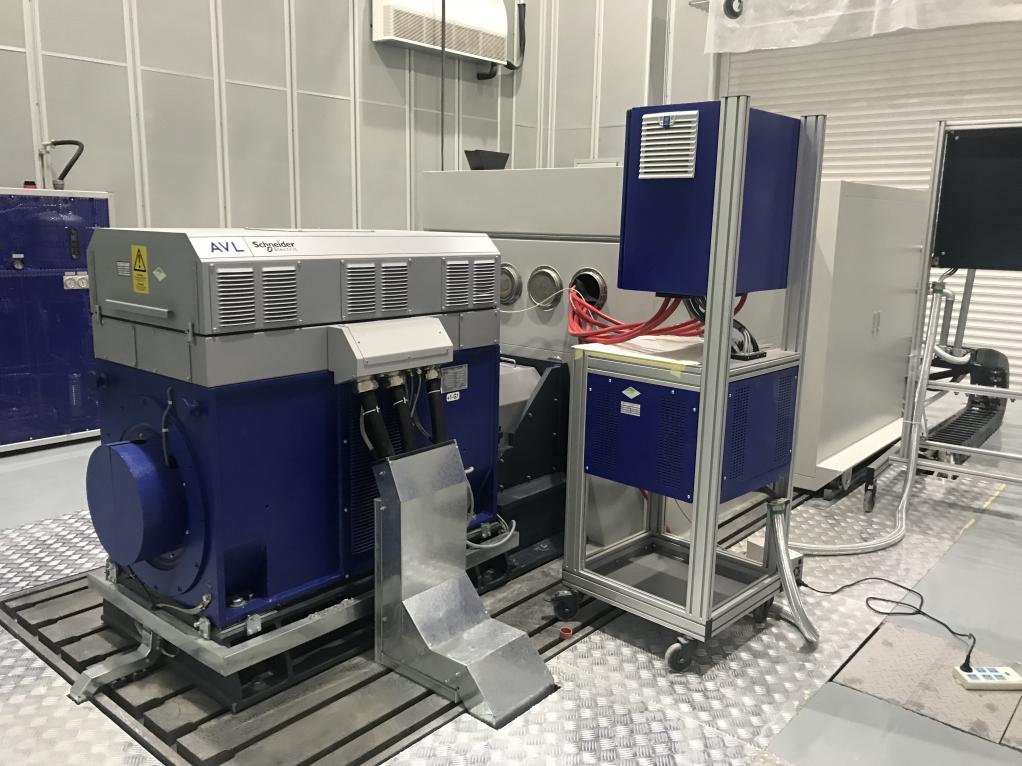
3. Power & Drive Test Research Office Covers two segments — engines and electric drives, providing type approval, environmental, 3C, export certification, design development and R&D verification services, with nationally leading methanol-engine certification capabilities. Key tests include: China-VI heavy-duty engine and China-IV heavy-duty gasoline engine environmental tests, off-road China-IV environmental tests, engine net-power type approval, motor type approval and export certification; classification-society authorized marine-engine emission tests; engine combustion analysis, emission and OBD calibration, NVH testing, and durability and reliability testing; engine conformity-of-production (COP) verification, import/export certification, and enterprise-standard development verification; e-drive IP protection, ice-water shock, thermal shock, vibration, salt-fog and corrosion reliability testing; e-drive system and DHT reliability testing; e-drive calibration, durability, and ECU HIL; and e-drive NVH and EMC testing.
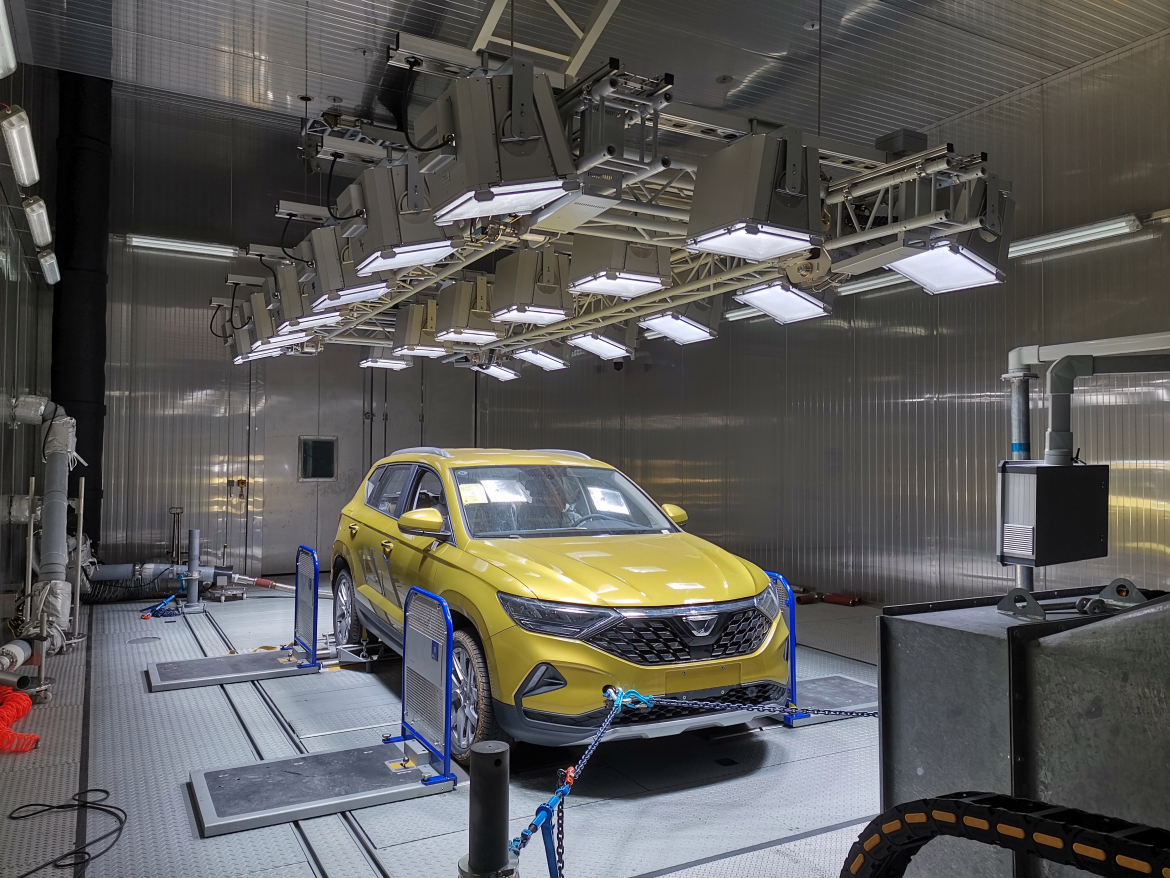
4. Light-duty Vehicle Test Research Office Covers four laboratory segments — whole-vehicle emission/environment, evaporation/refueling emission, durability & driving range, and chemical analysis. It provides ELV/RoHS hazardous-substance analysis of automotive materials, in-cabin odor and VOC optimization, China/EU/Japan/Brazil emission and energy-consumption testing, front-end forward development, conformity-of-production inspection and back-end upgrade verification — full-chain technical support from development to declaration to upgrade.
5. Heavy-duty Vehicle Test Research Office Houses the chassis-dynamometer, NEV safety, road and whole-vehicle performance laboratories. It conducts heavy-duty China-VII and China-VI regulatory testing, whole-vehicle thermal-management and energy-flow analysis, and various commissioned tests, mainly including: heavy-duty chassis-dynamometer fuel consumption and emissions testing; real-driving emissions (PEMS); whole-vehicle OBD and PVE testing; remote-terminal data conformity testing; energy consumption and driving range testing of BEVs, HEVs and FCEVs; EV and EV-bus safety requirements testing; EV conductive charging safety testing; 2015+ charging interoperability protocol conformity and vehicle conformity testing; real-world driving scenario construction; whole-vehicle energy-consumption analysis and optimization; and whole-vehicle thermal-management performance testing.